
The Short Version
Put a hobby greenhouse in the sunniest open spot on the south or southeast side of your property, on level, well-drained ground that is not at the bottom of a slope. Aim for at least 5 to 6 hours of direct winter sun, and keep it at least 2.5 times the height of any tree or building that sits to its south.
North of about 38 degrees latitude, an east-west long axis is usually preferred for winter growing. Then check wind, snow sliding off nearby roofs, and how far you will carry water and run power.
Most greenhouse buyers spend weeks comparing frames and glazing, then pick a spot in an afternoon. That is backwards. A good kit in a shaded, soggy or wind-blasted corner is still a poor greenhouse, and once the base is down, moving it is a real job.
Below are the decisions in the order that matters, how they shift for snowy, windy and hot climates, and a checklist to take outside with a tape measure.
How Much Sun Does a Greenhouse Spot Need?
Judge a site by its winter light, not its summer light. In northern climates a greenhouse gets only about a quarter of the winter light it would receive in June or July, so every hour of low-angle sun counts.
The working target is a minimum of five to six hours of unobstructed light during the winter months. Count those hours on a clear day in December or January, not in spring.
Direction matters as much as hours. The south or southeast side of the house is the first choice because that is where a greenhouse catches the most sun from November to February. East is second best, since morning sun on that side is sufficient for plants. Southwest and west come next, and the north side is the weakest choice, workable only for low-light plants and expensive to heat.
Should the Long Side Run East-West or North-South?
Here the sources genuinely disagree. John Bartok, an agricultural engineer at the University of Connecticut, writes that a north-south orientation gives plants more light at latitudes below 38 degrees, and that an east-west orientation is generally preferred for northern latitudes. The University of Georgia’s hobby greenhouse bulletin takes the other view, stating that a north-south greenhouse has less shade and more light than one running east-west, because shadows from the frame move across the plants through the day instead of parking in one spot.
A British Columbia greenhouse planning factsheet reconciles the two: north-south gives more even light, while in far northern climates east-west maximizes how much sun the structure collects through the day. For winter growing in northern climates, facing the broadest side south increases exposure to the low winter sun, but the best orientation also depends on latitude, season and prevailing winds.
If you live north of 38 degrees (any map app will show your latitude), the tiebreaker is the season you grow in. If you rely on the greenhouse from November through March, consider putting the long side east-west so the big south wall faces the low winter sun. If you mostly start seedlings in spring and grow through summer, a north-south run is fine and gives more uniform light across the benches. Either way, do not give up an open, sunny spot to hit a perfect compass bearing; as the wind section below explains, wind protection may matter more than orientation.
How Far Should a Greenhouse Be From Trees and Buildings?
A good rule of thumb is to keep a greenhouse at least 2.5 times the height of any shading object, building or tree, away from it. A 20-foot tree to the south of your site means roughly 50 feet of clearance, which sounds like a lot until you see winter shadows.
The sun’s highest point on the winter solstice is 90 degrees minus your latitude, minus 23.5 degrees. Solar noon, when the sun is due south, is when it is highest, so the shadows below are the shortest you will see all day in late December. Morning and afternoon shadows run longer.
| Latitude (north) | Noon sun height, Dec 21 | Shadow of a 20 ft (6 m) tree at noon | Shadow length vs object height |
|---|---|---|---|
| 35° | 31.5° | about 33 ft (10 m) | 1.6 times |
| 40° | 26.5° | about 40 ft (12 m) | 2.0 times |
| 45° | 21.5° | about 51 ft (15.4 m) | 2.5 times |
| 50° | 16.5° | about 68 ft (20.5 m) | 3.4 times |
| 55° | 11.5° | about 98 ft (30 m) | 4.9 times |
Calculated from the standard solstice sun-angle method; figures are for flat ground and a shading object due south. The 2.5 times rule matches the noon shadow at about 45 degrees north. Farther north, give obstacles more room, or accept some winter shade.
Tree type changes the picture. Evergreens shade all year, so do not let them sit where they block the greenhouse. Deciduous trees such as maple and oak can be useful to the west, where they cut harsh late-afternoon summer sun and then drop their leaves to let winter light through. They should not shade the greenhouse in the morning. Wherever a tree sits, check for limbs that could fall on the roof, and choose a sunny position away from overhanging trees.
What Kind of Ground and Slope Works Best?
The ideal site is well drained, nearly level, and open to the sun, sloping only slightly to the south and sheltered by a windbreak on the side of the prevailing wind. A gentle grade of about 0.5 to 1 degree is enough to help drainage, while the greenhouse base itself stays level. Avoid low-lying spots where water pools after rain, since standing water and muddy floors are exactly what you want to keep out of a greenhouse.
Where drainage is marginal, build the greenhouse up above the surrounding ground so rain and irrigation water drain away. A greenhouse can also change how surface water moves across a yard, so consider drainage tile along the exterior walls if water is a concern.
There is a second reason to avoid the bottom of a slope. The base of a slope is often a frost pocket where cold air collects.
Manufacturers are strict about the base itself: the greenhouse must sit on a flat, level, square base and be secured to a solid foundation. Pick a site where you can achieve that without major earthwork, since building on a slope can create construction issues.
How Do Wind and Windbreaks Affect Placement?
One point is worth taking seriously: wind protection may matter more than whether the greenhouse runs north-south or east-west. An effective windbreak also cuts winter heating needs. The best defense starts with placement, using existing buildings or a windbreak hedge or fence on the side the prevailing wind comes from.
A windbreak works over a surprising distance. Reductions in wind speed are measurable as far as 2 to 5 times the windbreak’s height on the upwind side and up to 30 times its height downwind. Those are maximum distances for a measurable effect, but they mean a hedge does not need to hug the greenhouse. Set it far enough away that it does not shade the greenhouse. In snowy areas, also leave room for drifts. University of Minnesota Extension warns that buildings placed too close to windbreaks can end up with large snow drifts on top of them, and that a 50 percent solid snow fence or tree windbreak can deposit snow up to 10 times its height downwind.
In very windy areas, greenhouses may be built parallel to prevailing winds to lower wind loads. Tennessee Extension explains that much wind damage starts when air rushes inside, so tight doors, vents and ground connections matter. A Vermont Extension guide adds that end walls are often the weak point, and a failed end wall can let wind in to act as a scoop that pulls ground posts out.
This is where siting and anchoring meet. Canopia says anchoring its greenhouses to the ground is essential to their stability, and advises against placing them in areas exposed to excessive winds. Grandio is blunter, stating that if you live in a windy location there is no way to build a 100 percent storm-safe greenhouse. Shelter and anchoring work together; neither replaces the other.
Where Does Snow Cause Siting Problems?
Snow causes siting problems in three ways: it builds up on the roof, it drifts against the walls, and it slides onto the greenhouse from nearby roofs. The University of Maryland warns that snow, ice or heavy rain can slide off a house roof onto an attached greenhouse. The same logic applies to a freestanding unit tucked beside a garage or shed eave. A Vermont Extension guide passes on a high-tunnel supplier’s advice not to build too close to a barn or other structure that could drop snow or ice onto the roof.
Leave room for snow to go somewhere once it slides off, with space for snow clearing between and around structures. Between commercial tunnels, 12 feet or more is suggested if snow has to be removed. That figure is not meant for a backyard greenhouse beside a fence or shed, but you still need space to stand and shovel along each side, because snow should not be left to build up against the walls.
Drifting is the other hazard, and a siting factor in its own right. Watch where drifts form in your yard each winter and keep the greenhouse out of them.
Heat matters too. Tennessee Extension points out that most greenhouses rely on interior heat to melt snow off the roof, so leaving a small greenhouse unheated is risky when heavy snow is expected. If you plan to leave it cold all winter, choose a site you can reach easily to brush the roof off from the ground. Our guide to greenhouse snow load ratings explains how to read a kit’s rating.
How Close Should It Be to the House, Water and Power?
Close enough that you will actually visit it every day. Plan for easy driveway access for moving supplies and plants, plus proximity to the garden, water, and electricity. It also helps to leave room for expansion.
For a permanent water supply where the ground freezes, a frost-free hydrant at the end of the line is a good option. Where local codes allow, power service can go in the same trench once it has been partly backfilled, with the electrician setting the burial depth and separation. The B.C. factsheet says any greenhouse with heating, fans, lighting or automation should have a dedicated power service installed by a professional electrician, who can oversee that work. Oklahoma State adds that all wiring must conform to local wiring codes. Before digging trenches or setting anchors, check for buried lines; Canopia’s manual specifically says to make sure there are no hidden pipes or cables in the ground first.
Attaching a greenhouse to the house is the extreme version of close. It puts the greenhouse close to the home’s water, electricity and heat, which can reduce costs, and sometimes lets you build off a door or basement entrance, but a lean-to has limited light, and warming it with household heat raises the home heating bill. A freestanding greenhouse can be set apart from other buildings to get the most sun, but if you plan to heat it, it needs its own heat source unless it is very close to a heated building.
Leave working room around the structure too. Allow enough room to get a wheelbarrow in and around the greenhouse, and remember that some kits need enough side space to slide the roof panels in during assembly.
Do Setbacks and Permits Limit Where It Can Go?
Often, yes, and the rules vary by city, county, province and homeowners association. Local rules can limit where a greenhouse may sit on a lot, so check local building codes, zoning and any HOA rules before you finalize a site. Our article Do You Need a Permit for a Greenhouse? explains how permit rules work in the US and Canada and what to ask your local office.
How Does the Best Spot Change by Climate?
The checklist below is written for the Northern Hemisphere, and how much weight each item gets depends on your weather.
Cold and Snowy Climates
Winter light is the scarce resource, so prioritize an unshaded south exposure and, north of about 38 degrees, consider an east-west long axis. Clear the winter shadow zone using the table above, keep away from eaves and trees that drop snow and limbs, and avoid low frost pockets. Plan a shoveling path on every side, and if you will not heat in winter, pick a spot you can reach after a storm. When you shortlist kits, check each frame’s snow rating; our best walk-in greenhouses guide is a good starting point.
Windy Climates
Shelter can matter more than orientation. Use buildings or a windbreak on the prevailing-wind side, set far enough back that it does not shade the greenhouse or, in snowy areas, drop drifts on it, and consider running the long axis parallel to the wind. Choose a site where you can build a solid, anchored base, and keep doors, vents and end walls tight, since much wind damage starts when air gets inside.
Hot Climates
Here the problem flips to too much sun. In very hot, low-elevation areas, avoid the west side, where afternoon sun is too hot. In most of Arizona, simple roof and wall vents are not enough to cool a greenhouse. Afternoon shade from nearby deciduous trees helps in summer and still lets winter light through after leaf drop. Orient the greenhouse so exhaust fans work with prevailing winds, not against them. Since vents alone fall short in the hottest climates, plan power for cooling equipment from day one.
A Greenhouse Site Checklist You Can Take Outside
Walk the yard with this table and a tape measure, ideally on a clear day between November and February when shadows are at their longest.
| Check | What to look for | Red flag |
|---|---|---|
| Winter sun | South or southeast exposure, 5 to 6 hours of direct winter sun | North of the house or under evergreens |
| Orientation | Long side facing south; east-west axis for winter growing in the north | Giving up an open site to hit a compass bearing |
| Shade clearance | At least 2.5 times the height of trees and buildings to the south; more north of 45° | Overhanging limbs |
| Ground | Nearly level, a slight slope to the south, well drained | Puddles after rain, bottom of a slope |
| Base | Room to build a flat, level, square, anchored base | Steep grade needing a retaining wall |
| Wind | Building or windbreak on the prevailing-wind side, not shading the site | Open, exposed site with no shelter |
| Snow | Clear of roof eaves and drift zones, room to shovel each side | Under a house, garage or shed roof edge |
| Water and power | Short hose run or trench to a frost-free hydrant; electrician-installed power | Unknown buried lines |
| Access | Easy path from the house, wheelbarrow room all around | A site you will avoid in bad weather |
| Rules | Setbacks, lot coverage and HOA rules checked | Building first and asking later |
Once you have a site, size the greenhouse to fit it, not the other way around. If the open, level, sunny patch is only 8 by 10 feet, a smaller kit there may provide better growing conditions than a larger one squeezed into shade. Our best greenhouses under $1,000 guide includes compact options, and the greenhouse growing calendar shows what a well-sited greenhouse can grow through the year.
Sources
- Oklahoma State University Extension: The Hobby Greenhouse, winter light hours, ideal site, falling limbs, wind protection and windbreaks, wiring codes
- University of Georgia Extension: Hobby Greenhouses (B 910), site ranking by direction, north-south light, deciduous shade, attached vs freestanding
- John W. Bartok Jr., University of Connecticut: Improve Winter Greenhouse Light Levels, orientation by latitude and winter light share
- B.C. Indigenous Greenhouse Factsheets: Greenhouse Planning and Design, orientation trade-offs, slope, drainage tile, water line and power service
- University of Tennessee Extension: Selecting and Designing Small-Scale Greenhouses to Fit Your Needs (W 935-B), 2.5 times shade rule, low areas, wind orientation, snow melt and fan orientation
- University of Maryland Extension: Planning a Home Greenhouse (FS 645), east exposure, tree types, raised sites for drainage, snow sliding off house roofs
- NASA Imagine the Universe: Ask an Astrophysicist, Earth, method for the winter solstice noon sun angle used in the shadow table
- University of Vermont Extension: A Guide to Preparing High Tunnels for Extreme Weather, snow drift, spacing, falling snow from nearby buildings, windbreak shading, end walls
- University of Arizona Extension: Greenhouses (Backyard Gardener #6), hot-climate siting, south-facing long side, access and room for expansion
- University of Arizona Extension: Designing a Windbreak, upwind and downwind protection distances
- University of Minnesota Extension: Prevent Roof Collapses From Snow and Ice, snow drifts near windbreaks and drift distances (checked November 2026)
- Palram-Canopia: Snap & Grow Series Assembly Instructions, level base, anchoring, wind exposure, buried lines, assembly space (checked November 2026)
- Grandio Greenhouses: Ascent Assembly Manual, frost pockets, level and square base, wheelbarrow clearance, south-facing broad side (checked November 2026)
Image Credit
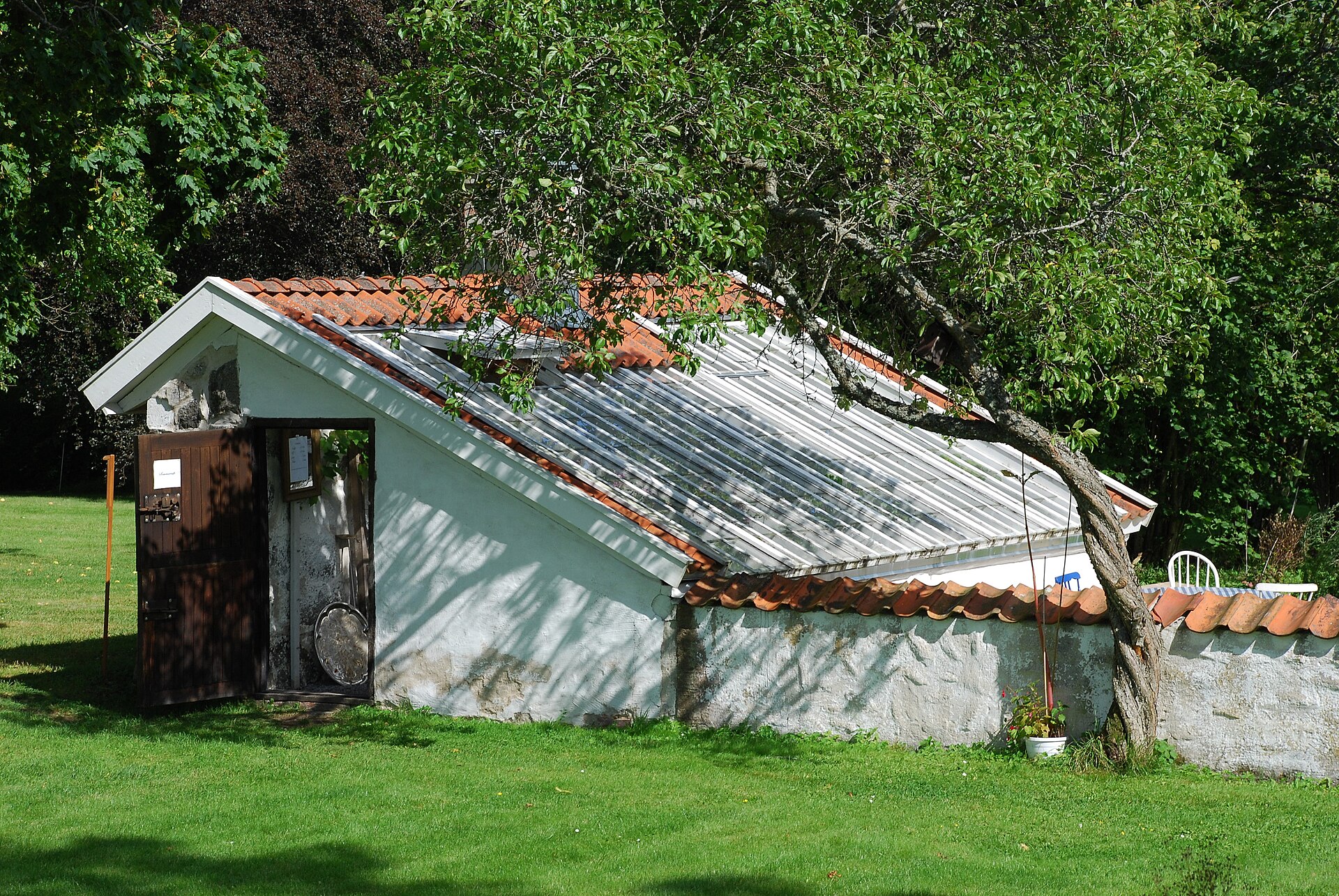
- Featured image: Växthus Osaby, by Pieter Kuiper, Wikimedia Commons, public domain