
We may earn a commission when you buy through links on this page, at no extra cost to you. As an Amazon Associate, we earn from qualifying purchases.
The Short Version
The best greenhouse kit is the one rated for your snow and wind, not the biggest one your budget reaches. In a mild climate, the Palram Mythos 6×8 publishes a 15.4 psf snow rating and a 56 mph wind rating. In heavy snow, the Grandio Ascent is rated to 25 psf and 76 mph, with its snow load kit included.
A kit with no published rating is a season extender, not a winter structure. Snow country buyers should plan on clearing the roof. By the greenhouse industry’s formula, Minnesota’s lowest ground snow load works out to about 42 psf on a flat, unheated roof before any slope reduction, more than any kit here is rated to carry.
Greenhouse Kits Compared at a Glance
Climate is the first filter here, because the rating that matters in Georgia is not the one that matters in Duluth. Ratings come from each maker’s own spec sheets and product pages, checked on November 5, 2026, and price bands reflect prices shown that day.
| Kit | Size | Glazing | Snow Rating | Wind Rating | Price Band | Climate Fit |
|---|---|---|---|---|---|---|
| Outsunny 8×6 | 8 ft by 6.25 ft | Polycarbonate, thickness not listed | Not listed | Not listed | Under $500 | Mild, sheltered |
| Palram Mythos 6×8 | 6 ft 1 in by 8 ft | 4 mm twin-wall | 15.4 psf | 56 mph | $500 to $1,000 | Light snow |
| Palram Snap & Grow 8×12 | 8 ft 1 in by 12 ft 3 in | Crystal-clear polycarbonate | 15.4 psf | 56 mph | $500 to $1,000 | Light snow |
| Palram Hybrid 6×14 | 6 ft 1 in by 13 ft 11 in | Twin-wall roof, clear walls | 15.4 psf | 56 mph | $1,000 to $2,500 | Light snow |
| Palram Bella 8×16 | 8 ft by 16 ft | 6 mm twin-wall | 20.5 psf | 75 mph | $1,000 to $2,500 | Windy, moderate snow |
| Grandio Ascent 8×8 | 8 ft by 8 ft | 6 mm polycarbonate | 25 psf | 76 mph | $1,000 to $2,500 | Heavier snow, with roof clearing |
| Palram Glory 8×12 | 8 ft 4 in by 11 ft 11 in | 10 mm twin-wall | 20.5 psf | 62 mph | $2,500 to $5,000 | Cold, moderate snow |
| Grandio Elite 8×8 | 8 ft by 8 ft | 10 mm polycarbonate | 25 psf | 76 mph | $2,500 to $5,000 | Heavier snow, added insulation |
| RiverSide 8×8 | 8 ft by 8 ft | 8 mm twin-wall | 24 psf | 65 mph | $2,500 to $5,000 | Heavier snow, with roof clearing |
| Legacy 8×8 | 8 ft 7.5 in square | 6 mm twin-wall roof, 3 mm tempered glass walls | 32 psf | 85 mph | Over $5,000 | Heavier snow, high wind |
The RiverSide and Legacy are sold by Gothic Arch Greenhouses. Prices move often, so check the current figure before you buy.
What a Snow Load Rating Means in Real Snow
A snow rating is a weight in pounds per square foot, or psf, not a depth. The University of Vermont says each inch of rainwater that snow equals puts 5.2 psf on a structure. Heavy, wet snow takes only 3 to 4 inches to equal an inch of rain, while a foot of fluffy snow may equal the same inch.
That gives a quick way to translate any rating into something you can picture. The table below uses those Vermont figures, rounded, and our snow load guide covers the topic in more depth.
| Kit Rating | Wet Snow at That Weight | Fluffy Snow at That Weight | Rough Ground Load Equivalent |
|---|---|---|---|
| 15.4 psf | 9 to 12 inches | About 36 inches | About 18 psf |
| 20.5 psf | 12 to 16 inches | About 47 inches | About 24 psf |
| 25 psf | 14 to 19 inches | About 58 inches | About 30 psf |
| 32 psf | 18 to 25 inches | About 74 inches | About 38 psf |
The last column divides each rating by 0.84, taken from the National Greenhouse Manufacturers Association design manual, which multiplies ground snow load by 0.7, then by 1.2 for an unheated greenhouse. The formula also has exposure and importance factors, and we set both at 1.0. That is a flat-roof figure, and slope, exposure and drifting all change it. Makers do not say their ratings work this way, so use the column to compare kits, not to prove one is safe for your site.
Match the Kit to Your Climate
Your local ground snow load decides which row of the first table applies to you. Local code sets that figure, so ask your building department what applies at your address, and ask whether you need a greenhouse permit.
Mild Climates With Little Snow
If snow is rare, spend on wind resistance and ventilation instead of thick glazing. The Mythos, Snap & Grow and Hybrid all carry the same 15.4 psf and 56 mph ratings, so the choice between them comes down to light, size and door width.
Moderate Snow and Exposed Sites
This is where 20.5 psf kits earn their price, since that rating is about a third higher than the 15.4 psf tier. The Bella suits an open, windy lot at 75 mph, and the Glory suits a colder site, thanks to its 10 mm walls and roof.
Snow Belt Winters
Look at 24 and 25 psf kits first, and plan on clearing the roof anyway. Minnesota’s lowest ground snow load is 50 psf, which works out to about 42 psf on a flat, unheated roof before any slope reduction, and that is more than any kit in this guide is rated to carry.
The University of Vermont’s snow advice for growers is worth borrowing here. If you have heat, run it when heavy snow is forecast, and clear the snow evenly from both sides, because a greenhouse is most stable when the load is balanced.
Our Picks by Situation
There is no single winner here, because buyers are limited by different things. Find your constraint below, and read the trade-off before you buy.
Lowest Cost for a Sheltered Yard: Outsunny 8×6

The Outsunny 8×6 is the cheapest walk-in here, with an aluminum frame, a roof vent and rain gutters. Its Amazon listing calls it “winter-grade,” yet it lists no snow rating and no wind rating, so we would not trust it through a snowy winter. Treat it as a spring and fall season extender, and see our guide to the best greenhouses under $1,000 for more options.
Best Rated Starter Kit: Palram Mythos 6×8
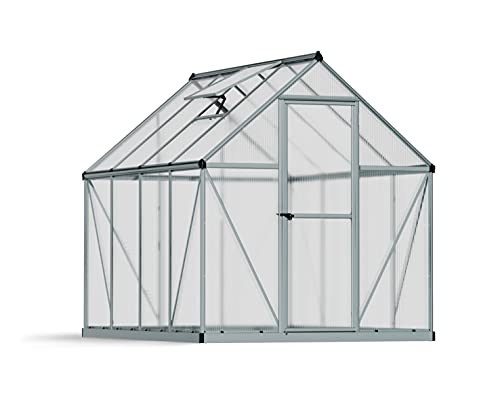
Palram Mythos 6×8
$689.99
Check price on AmazonPrice as of Nov 25, 2026, 12:14 AM GMT+0000. Details
The Mythos 6×8 is the least expensive kit in this guide with published ratings. It has 4 mm twin-wall panels, a galvanized steel base and a five-year warranty, and Palram’s sliding panel system holds the glazing. Its limit is the door, at 1 ft 10 in wide and 5 ft 4 in tall, so taller buyers should measure first, and our Mythos review has more detail.
Most Floor Space for the Money: Palram Snap & Grow 8×12
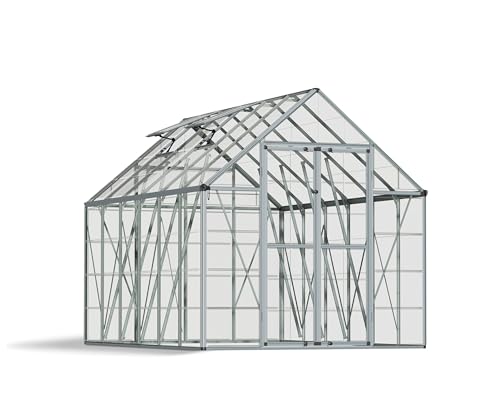
Palram Snap & Grow 8×12
$799.00
Check price on AmazonPrice as of Nov 25, 2026, 12:14 AM GMT+0000. Details
The Snap & Grow 8×12 gives you an 8 ft 6 in peak and double doors about 3 ft 9 in wide, at a price that was close to the Mythos when we checked. Crystal-clear panels pass over 90 percent of light, according to Palram. The trade-off is direct light with no diffusion, so plan on shade cloth for strong summer sun.
Best for a Long, Narrow Yard: Palram Hybrid 6×14

Palram Hybrid 6×14
$1,099.99
Check price on AmazonPrice as of Nov 25, 2026, 12:14 AM GMT+0000. Details
The Hybrid 6×14 pairs twin-wall roof panels with clear walls, which gives you diffused light from above and more light from the sides. It suits a strip along a fence, though its ratings are no higher than those of the shorter kits. Palram rates the Hybrid at 15.4 psf on its spec sheet, so a 14 ft roof in snow country still needs regular clearing.
Best Palram Kit for Wind: Bella 8×16

The Bella 8×16 has the highest wind rating of any Palram kit here at 75 mph, along with 6 mm twin-wall walls and roof. Palram says the bell shape lets snow slide off, although one owner on Canopia’s site says the first heavy snow did not slide as easily as expected. Its door is 5 ft 7 in tall, so check headroom at the entry.
Best for Heavy Snow on a Budget: Grandio Ascent 8×8
The Grandio Ascent has the lowest starting price of any kit here rated at 24 psf or more, at 25 psf and $1,999. Grandio includes the steel base kit and snow load kit, and it backs the frame for life and the panels for ten years. Its smallest size is 8×8, and it ships by oversized freight to the curb, as our Ascent review explains.
Best for Cold Without Extreme Snow: Palram Glory 8×12
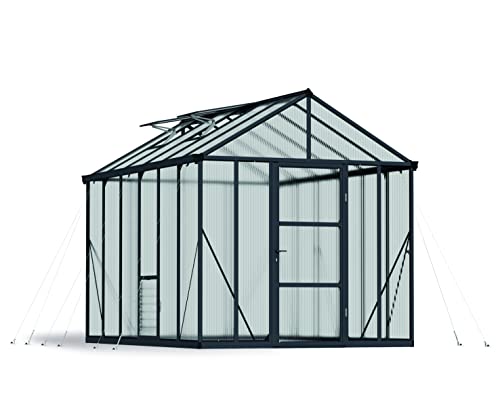
The Glory 8×12 uses 10 mm twin-wall panels, and it includes an automatic vent opener and a ten-year warranty. That thicker glazing insulates better, but it does not raise the snow rating past 20.5 psf. If snow load is your main worry, the Grandio Elite offers the same 10 mm thickness at 25 psf.
Strongest Option Here: Legacy 8×8
The Legacy from Gothic Arch is rated to 32 psf and 85 mph, with a twin-wall roof and tempered glass walls. It comes in one size and one brown frame, and at $8,950, it costs more than four times the Ascent’s starting price. Buy it if strength and looks both matter more than cost.
Glazing: What the Thickness Buys You
Twin-wall polycarbonate 8 mm thick rates at about R-1.5 to R-2.0, and 10 mm at about R-1.7 to R-2.2, while a single pane of 3 mm glass sits near R-1. That is why twin-wall matters in cold climates, as our glazing thickness guide explains.
The cost is light. Typical twin-wall panels run at around 83 percent light transmittance and single-wall panels at around 94 percent, and Palram lists the 10 mm Glory at 79 percent. Our polycarbonate vs glass comparison covers the wider tradeoffs.
Be a little skeptical of the longevity claims on product pages. Palram says its panels will not yellow, while Virginia Tech says twin-wall panels show little loss of light transmittance for 10 years, with a typical effective life of 20 to 25 years. Expect a very long-lived panel, not a permanent one.
How Much Heat You Would Need
You can estimate heat loss before you buy a heater. University of Georgia Extension divides surface area times the temperature difference by the glazing’s R-value, and it lists double polycarbonate at R-2, although twin-wall panels can rate as low as R-1.5. For single glass, we used R-1.
The table assumes 200 square feet of walls and roof, kept at 40 degrees F, which is a round figure for a small kit rather than a measured one. Your USDA hardiness zone reflects the average annual extreme low, and that is not the coldest it can ever get. Treat these rows as examples, and use local winter records to set your design low.
| Coldest Night Outside | Twin-Wall (R-2) | Single Glass (R-1) |
|---|---|---|
| 20 degrees F | 2,000 BTU per hour | 4,000 BTU per hour |
| 0 degrees F | 4,000 BTU per hour | 8,000 BTU per hour |
| Minus 20 degrees F | 6,000 BTU per hour | 12,000 BTU per hour |
| Minus 40 degrees F | 8,000 BTU per hour | 16,000 BTU per hour |
Those figures cover conduction only, and the full method adds air leaks and perimeter loss on top. Round up when you size a heater, and remember that small kits with gaps around doors and vents will lose more than this estimate shows.
Ventilation Matters as Much as Heat
A small greenhouse can overheat on a sunny day, even in winter. A house with ridge and side vents should have ridge vents of about one-fourth the floor area, with side vents about the same size. On a 48 square foot Mythos 6×8, that would be 12 square feet.
Hobby kits use separate roof vents instead, so treat that figure as a yardstick rather than a pass or fail test. An automatic opener only works the vent you already have, while an exhaust fan adds capacity, and Oklahoma State University Extension says a fan should change the air once every minute.
Size and Site
Choose width first. Width is the most important dimension, because it will not change during the life of the greenhouse, and it decides your bench layout and walkway.
The first choice for a site is the south or southeast side of the house, with at least five to six hours of unobstructed light in winter. On a tight lot, a lean-to can use the house wall, but check its ratings too. Palram rates its 8×4 Lean To at 15.4 psf and only 47 mph, so site it out of the wind.
Base, Anchoring and Delivery
None of the ratings above mean much on an unanchored kit. Canopia, Palram’s brand, says anchoring is essential and required for your warranty to be valid, and it sells the kits without ground stakes. Grandio’s wind figure also comes with the words “when anchored properly.”
Budget for the base as well, because it changes the real price. Canopia says its greenhouses do not come with a floor, and Gothic Arch recommends an optional galvanized steel base for the RiverSide. Grandio charges separately for the base kit on its Element and Summit lines.
Assembly is not quick. One Mythos owner on Canopia’s site says it “definitely required 2 people to assemble,” and another calls it “a bit fiddly.” Grandio ships by heavy freight to the curb, so you should plan how you will move the boxes to the site.
What the Ratings Do Not Promise
A published rating is a maker’s figure, and makers limit what it covers. Grandio’s warranty page says its ratings are “not a guarantee of actual performance in every and all situations,” and it warns that damage from heavy wet snow buildup may not count as a product defect.
Read that as a reason to keep clearing the roof, even on a rated kit. A rating helps you compare kits, but it will not pay for a collapsed one, and Grandio ties its ratings to a greenhouse installed and maintained properly.
How to Choose, in Order
Start with your local ground snow load, and use the snow table above as a rough comparison, not as proof that a kit is safe for your site. Then check wind exposure, since an open lot may rule out kits rated at 56 mph or less.
Next, measure your site and choose the width. Only then compare prices, and add the base, the anchors and a vent opener before you decide what a kit really costs.
Sources
- Canopia by Palram product pages and specification sheets: Mythos, Hybrid, Snap and Grow, Bella, Glory, Lean To, canopia.com
- Grandio Greenhouses, Greenhouse Comparison, Limited Warranty and Shipping Policy pages, grandiogreenhouses.com
- Gothic Arch Greenhouses, RiverSide and Legacy kit pages, gothicarchgreenhouses.com
- Amazon.com product listings for each linked kit, checked November 5, 2026
- University of Vermont, Prevent Greenhouse Collapse, uvm.edu/vtvegandberry
- National Greenhouse Manufacturers Association, Structural Design Manual, Chapter 2, hosted by ceac.arizona.edu
- Minnesota Rules, part 1303.1700, Ground Snow Load, revisor.mn.gov
- Virginia Cooperative Extension, SPES-821, Controlled Environment Agriculture Coverings and Glazing Materials, pubs.ext.vt.edu
- University of Georgia Cooperative Extension, Bulletin 792, Greenhouses: Heating, Ventilation and Cooling, fieldreport.caes.uga.edu
- Oklahoma State University Extension, The Hobby Greenhouse, extension.okstate.edu
- USDA Agricultural Research Service, Plant Hardiness Zone Map and How to Use the Maps, planthardiness.ars.usda.gov
Image Credit
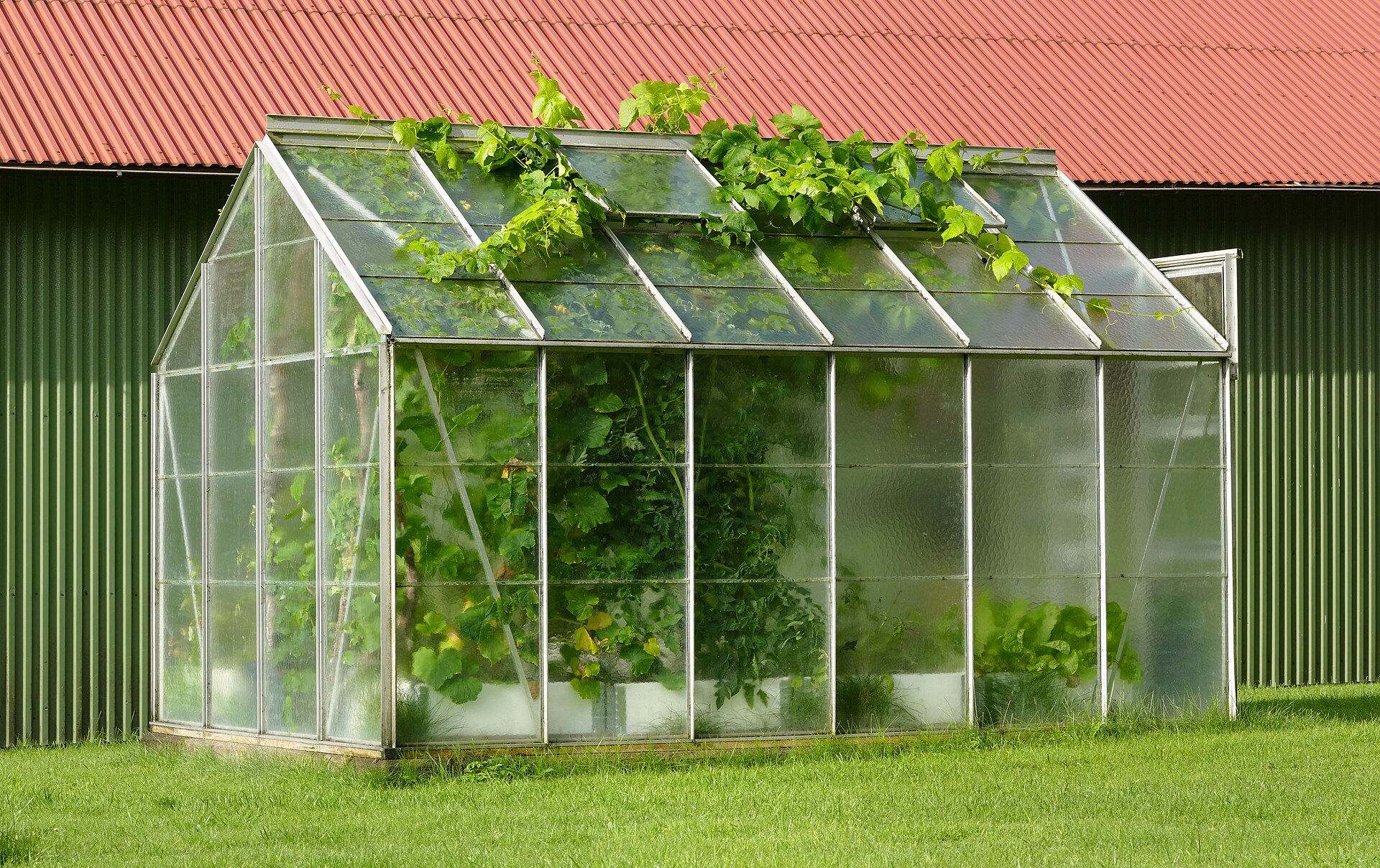
- Featured image: Small greenhouse with grapevines escaping, by W.carter, Wikimedia Commons, CC0